The right theory at the right time
You don't turn up to a job and think: "I'll try working on flow rates today."
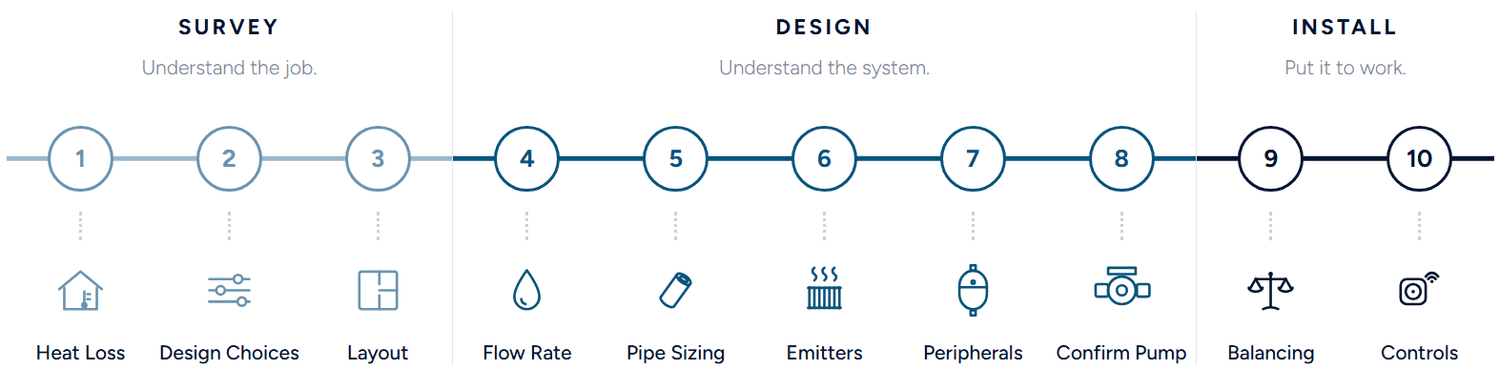
Real jobs happen in stages:
- Heat loss matters during the survey.
- Flow rate matters when you're planning the system
- Balancing matters when you're commissioning it.
The 10 Steps puts hydronic knowledge into the order you actually use it.
What changes when you have a plan?
Heating engineers have good access to hydronics theory.
The difference is having a practical way to apply it on real jobs.
With the 10 Steps, you're no longer deciding what to look at next.
You know where to start, what comes next, and what to do if something isn't working.
By the time you reach commissioning, you're no longer relying on assumptions, guesswork or rules of thumb.
You're working from a thought-through plan.
Learn it once. Use it everywhere.
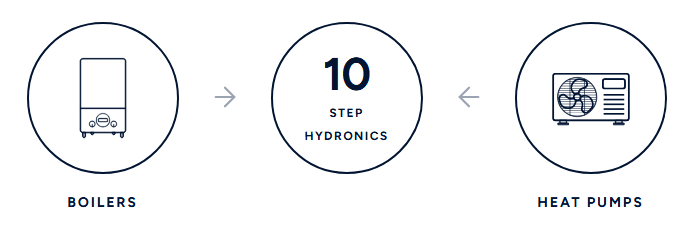
Whether you're fitting a boiler, installing a heat pump or troubleshooting poor performance, the same process applies.
Technologies change, heating systems still follow the same rules.
The 10 Steps gives you a repeatable way to apply those rules on every job, whether you're fitting a boiler, installing a heat pump, or trying to solve a problem that nobody else can.